Within Christian heritage, the Jerusalem Cross is a distinguished emblem that reflects Jesus’ deep connection with the Holy Land and the city of Jerusalem. These crosses are treasured as souvenirs and serve as markers for ancient churches and sacred sites throughout Jerusalem. Many people choose to wear the Jerusalem Cross in the form of jewelry—such as necklaces, pendants, rings, earrings, or bracelets—or display it as a wall ornament in their homes. The Jerusalem Cross pendant is often called a “Pilgrim’s Cross,” worn by travelers and visitors from around the world. It has become a cherished symbol for those who have journeyed to Jerusalem and the Holy Land, as well as for anyone wishing to keep the memory and spirit of these sacred places close to their heart.
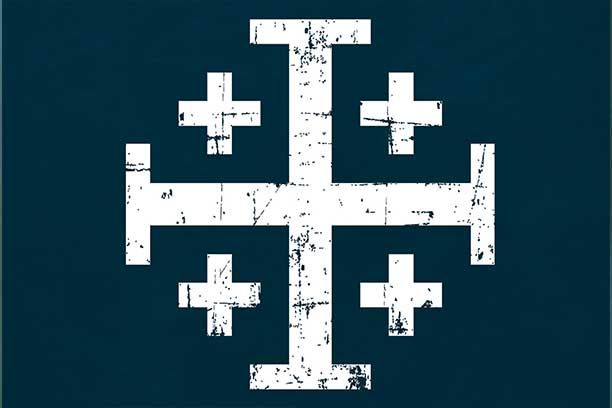
Jerusalem cross in the history:
Its origin is believed to be rooted in the time of the Crusaders, during the Crusader Kingdom of Jerusalem ruled the holy city, from 1099 to
1187 AD. According to some historical evidence, Godfrey de Bouillon was the first to use the Jerusalem Cross as a distinct symbol. Godfrey of Bouillon (c.1060–1100) was a Frankish noble and a key leader of the First Crusade. After the bloody capture of Jerusalem in July 1099, he refused the title “King,” calling himself instead “Advocate of the Holy Sepulchre,” believing Christ alone was the city’s true king. He led one of the main assaults during the siege of Jerusalem, directing the troops that first broke through the northern walls—an action crucial to the city’s fall. Godfrey died the following year, and his brother Baldwin I became the first official King of Jerusalem.
This cross became the official coat of arms of the newly founded Latin Kingdom of Jerusalem. It symbolized not only Christian devotion but also the idea of spreading the faith “to the four corners of the world.”
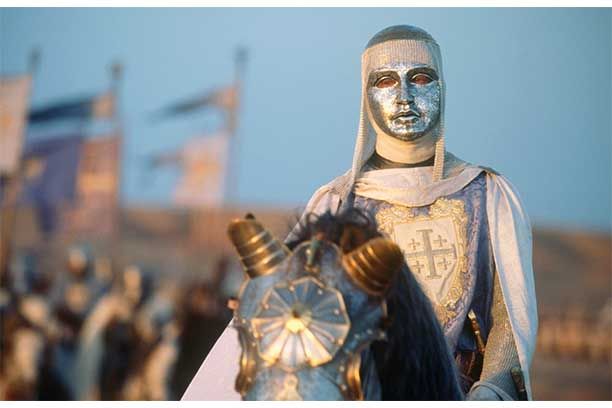
Jerusalem cross on King Baldwin's outfit in the "Kingdom of Heaven" movie.
Following the loss of Jerusalem to Muslim forces in 1187, the cross continued as the heraldic symbol of the titular Kingdom of Jerusalem, claimed by various European monarchs even after the territory was gone. It appeared in European coats of arms and church art for centuries.
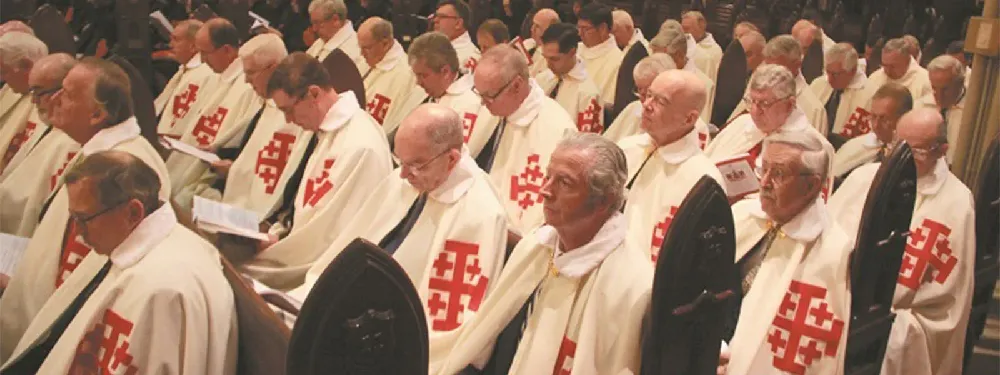
In the 14th century, the Franciscan Order, appointed by the Pope as guardians of the Holy Land’s Christian sites (the Custodia Terrae Sanctae), adopted the Jerusalem Cross as their emblem. This reinforced its status as a sign of pilgrimage and guardianship of the holy places.
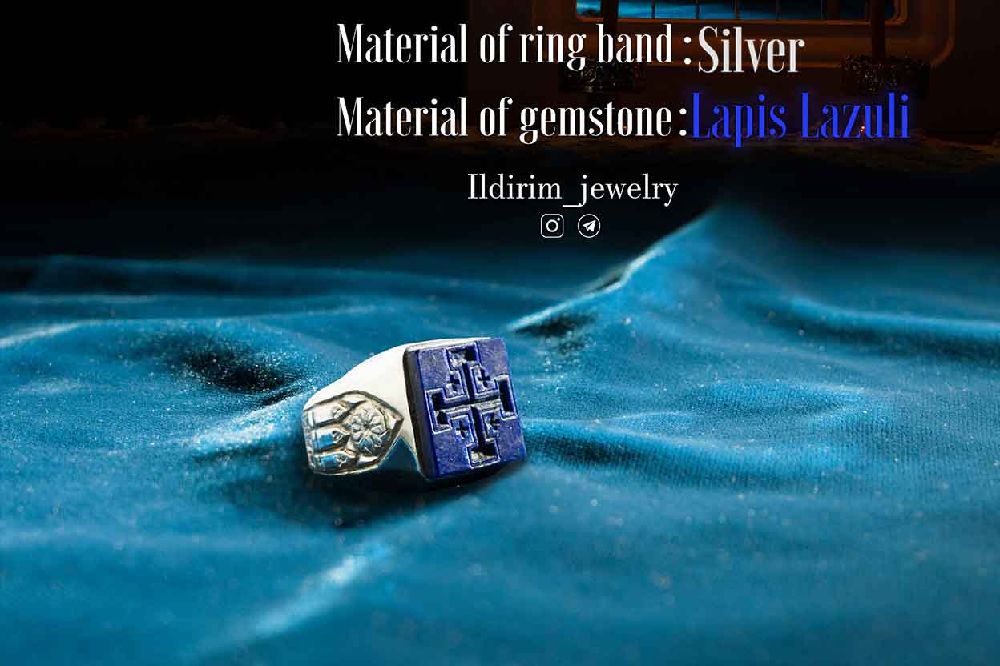
Lapis lazuli Jerusalem cross hand-engraved ring in Ildirimjewelry store:
What is the meaning of Jerusalem cross?
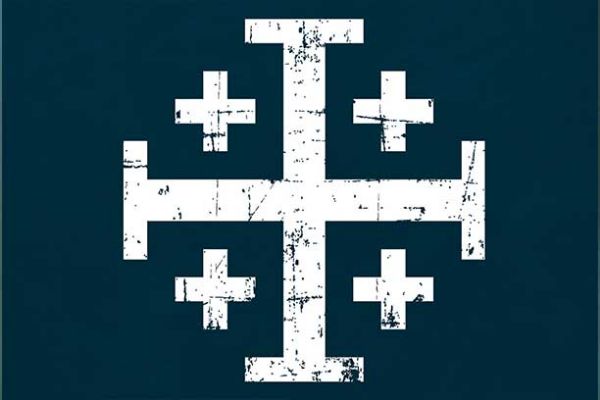
In the previous posts, I described the meaning of five-part symbolic compositions, and the Jerusalem Cross is connected to this type of symbolism. The Jerusalem Cross features a large, perfectly balanced cross ending in “T”-shaped arms, known as Tau Crosses, which symbolize the Old Testament. Surrounding it are four smaller, equal Greek Crosses, representing the New Testament.
This emblem is most closely associated with Jesus Christ and the mission to carry the gospel to all four corners of the earth. Some interpret the four small crosses as symbols of the four Evangelists—Matthew, Mark, Luke, and John. Others see them as a reminder of Christ’s wounds in his hands and feet, while the central large cross signifies the spear wound in his side inflicted by the Roman soldiers.
By Ebrahim Masoumi,
Ildirimjewelry